What is Generation Y?
The simple definition of the generations is as follows:
1901 – 1924: The Greatest Generation aka The Veterans.
These guys were born during the Great War, grew up through the Great Depression and fought in World War 2. They were fed on food stamps, handouts and the grapes of wrath. If you want to argue their right to call themselves the Greatest Generation then go for it. Unfortunately you are likely to be clobbered by a walking frame, prosthetic limb or Stephen Spielberg 😉
1925 – 1945: The Silent Generation.
These poor buggers grew up in the shadow of the Greatest Generation. They were the children who were supposed to be seen and not heard, and when they tried to speak up they copped an earful of:
 MP: In them days we was glad to have the price of a cup o’ tea.
GC: A cup o’ cold tea.
EI: Without milk or sugar.
TJ: Or tea.
MP: In a cracked cup, an’ all.
EI: Oh, we never had a cup. We used to have to drink out of a rolled up newspaper.
GC: The best we could manage was to suck on a piece of damp cloth.
TJ: But you know, we were happy in those days, though we were poor.
MP: Because we were poor. My old Dad used to say to me, “Money doesn’t buy you happiness, son”.
EI: Aye, ‘e was right.
MP: Aye, ‘e was.
EI: I was happier then and I had nothin’. We used to live in this tiny old house with great big holes in the roof.
GC: House! You were lucky to live in a house! We used to live in one room, all twenty-six of us, no furniture, ‘alf the floor was missing, and we were all ‘uddled together in one corner for fear of falling.
TJ: Eh, you were lucky to have a room! We used to have to live in t’ corridor!
MP: Oh, we used to dream of livin’ in a corridor! Would ha’ been a palace to us. We used to live in an old water tank on a rubbish tip. We got woke up every morning by having a load of rotting fish dumped all over us! House? Huh.
EI: Well, when I say ‘house’ it was only a hole in the ground covered by a sheet of tarpaulin. But it was a house to us.
GC: We were evicted from our ‘ole in the ground; we ‘ad to go and live in a lake.
TJ: You were lucky to have a lake! There were a hundred and fifty of us living in t’ shoebox in t’ middle o’ road.
MP: Cardboard box?
TJ: Aye.
MP: You were lucky. We lived for three months in a paper bag in a septic tank. We used to have to get up at six in the morning, clean the paper bag, eat a crust of stale bread, go to work down t’ mill, fourteen hours a day, week-in week-out, for sixpence a week, and when we got home our Dad would thrash us to sleep wi’ his belt.
GC: Luxury! We used to have to get out of the lake at six o’clock in the morning, clean the lake, eat a handful of ‘ot gravel, work twenty hour day at mill for tuppence a month, come home, and Dad would thrash us to sleep with a broken bottle, if we were lucky!
TJ: Well, of course, we had it tough! We used to ‘ave to get up out of shoebox at twelve o’clock at night and lick road clean wit’ tongue. We had two bits of cold gravel, worked twenty-four hours a day at mill for sixpence every four years, and when we got home our Dad would slice us in two wit’ bread knife.
EI: Right! I had to get up in the morning at ten o’clock at night half an hour before I went to bed; drink a cup of sulphuric acid; work twenty-nine hours a day down mill and pay mill owner for permission to come to work; and when we got home, our Dad and our mother would kill us and dance about on our graves singing Hallelujah.
MP: And you try and tell the young people of today that ….. they won’t believe you.
ALL: They won’t!
Gotta love Monty Python 🙂
1946 – 1964: The Baby Boomers.
So called because all the hippy free love and LSD of the sixties promoted a massive population explosion. They are responsible for bell-bottom trousers, love beads, chunky plastic jewellery and other fashion faux pas so gaudy that even St Vincent de Paul won’t accept their donations. Many of these people are still coming down from their high and are busily making sure they don’t leave behind any inheritance.
There are over 5,000,000 Baby Boomers in Australia alone and their motto is:
We believe that fun doesn’t have to be the privilege of the X or Y Generation, and that Baby Boomers (BBs) have the right to feel as young as they like for as long as they like.
Be nice to the X and Y Generations BB, for we will be funding your nursing homes 😉
1965 – 1982: Generation X.
Charged with repairing the damage done by the baby boomers’ excessive / compulsive nature and high-level consumption of the world resources, Generation X missed out on the Beatles, Vietnam and the good music of the Rolling Stones. Your average Gen-Xer is early forties, raising a family, worried about the cost of electricity and fed up with petrol prices. On top of that Generation Y is nipping at our heals with their tweets, Facebook likes, visible butt crack and abbreviated text language.
We were the first generation to grow up with computers and as such we are technically adept. We came of age in an era of dual income households and we often known as ‘latchkey kids’. Divorce rates were high amongst our parents and as a result we became self reliant and skeptical of authority. We grew up with grunge music and MTV (back when it was cool) and, unfortunately, we live to work rather than work to live.
1983 – 2000: Generation Y.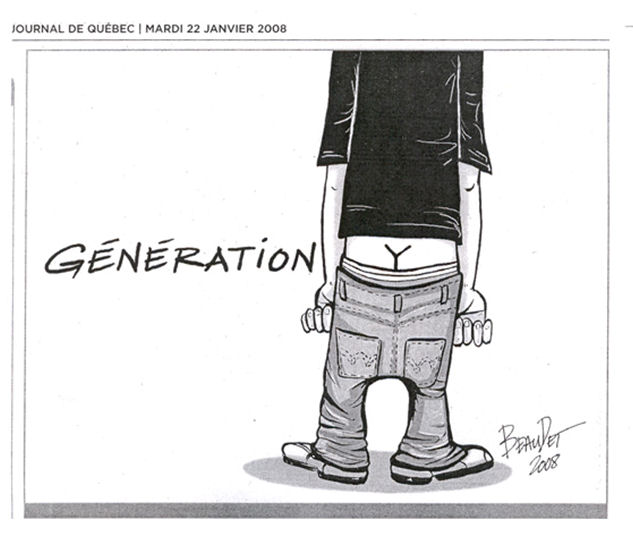
Y should I get a job?
Y should I leave home and find my own place?
Y should I get a car when I can borrow yours?
Y should I clean my room?
Y should I wash and iron my own clothes?
Y should I buy any food?
Nuff said 😉
 Recently I was subjected to some rather nasty comments from an anonymous detractor. Whilst this has not been an unusual occurrence over the last eighteen months, the abuse was aimed at my iDad and Pine Gap stories – not at me personally. I’ve got a pretty thick skin (head too according to some) when it comes to insults about my appearance, intelligence or behaviour. However, targeting poor defenceless iDad and the good Colonel Drax, was a little harsh.


 Matt's Notes